ABOUT US
What We Do
Boston University Finance and Investment Club is the largest undergraduate student organization in the Questrom School of Business. As a club, we serve the Boston University community in the following three ways:
Give students exposure to the financial services industry by creating and nurturing relationships with professionals and by organizing various career development events
Manage over ~$1.6M as part of Boston University’s endowment by investing in small-cap stocks using a value investing approach
Educate the undergraduate student population through our Investment Research, Investment Management, and Mentorship programs
Our educational structure is built as a learning continuum, guiding students through progressively deeper levels of involvement over their time in the club. First-year members join as Junior Analysts in our Investment Research (IR) program, where they build foundational technical skills, including financial modeling, valuation, and equity research, while getting exposed to the industry. In their second year, members advance into our Investment Management (IM) program, where they deepen technical acumen, and are simultaneously co-enrolled in our Mentorship program, a structured recruiting bootcamp designed to prepare them for the high finance recruiting process.
Dear BUFC Alumni and Members,
My name is Weronika Wieczerzak, and I am honored to step into the role of President of the BUFC. Having led our mentorship program this past year, I have seen firsthand the dedication of this community and am excited to build on the momentum we have created together. By any measure, this has been one of the most transformative years in BUFC's history.
Our recruiting outcomes have never been stronger, the Class of 2028 secured more offers at top buy-side and sell-side institutions than any class in the club's history. This is a direct reflection of a deliberate strategic shift BUFC has undergone over the past year: transitioning from an open-enrollment model to a selective, high-caliber community. By investing more deeply in a smaller cohort of students, we have been able to deliver richer programming and more individualized attention. This year's New York Trek gave our members direct access to firms across Wall Street, and we are grateful to our recruiting partners and alumni whose relationships and generosity made these visits possible
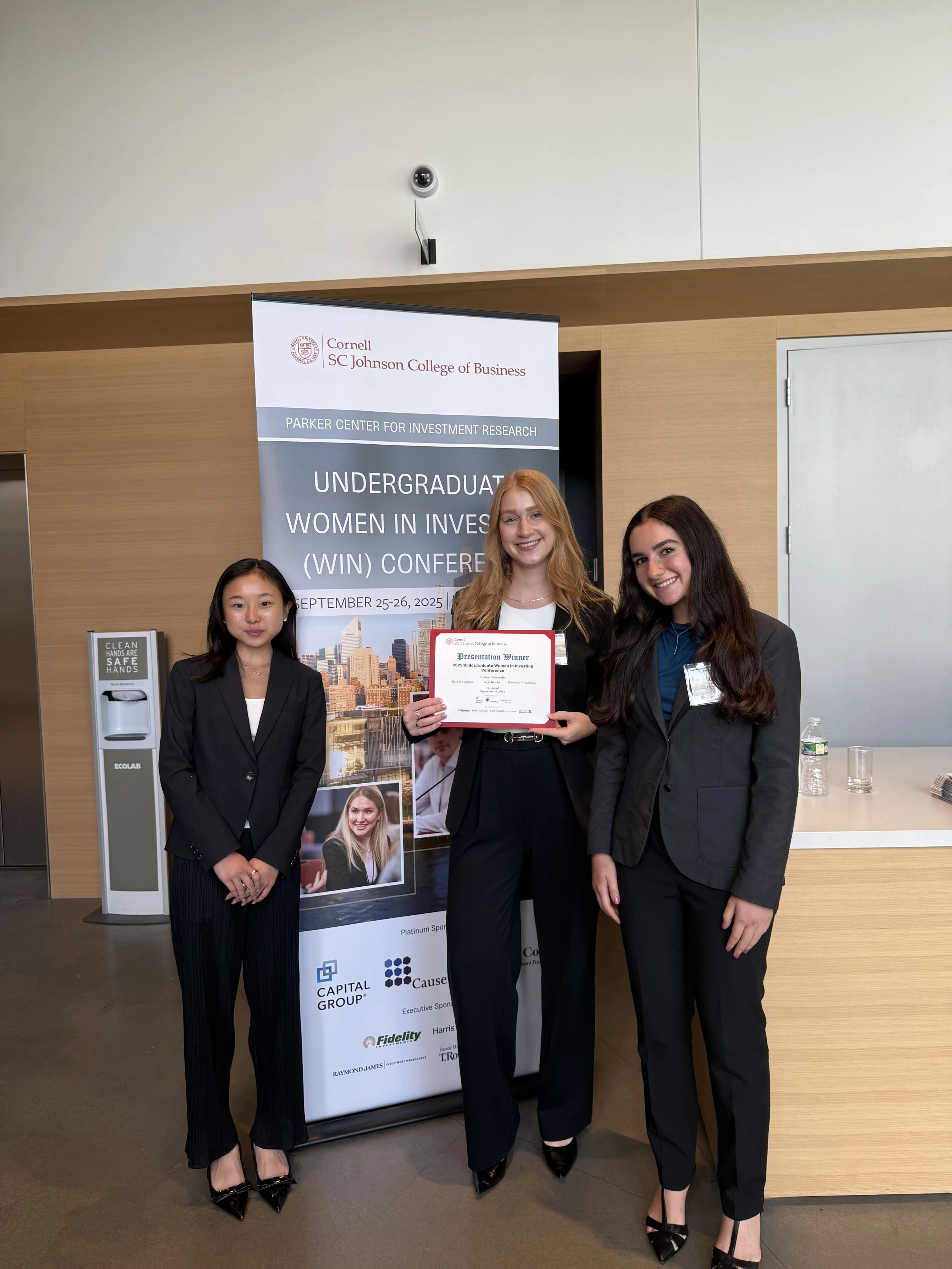
Beyond the classroom, our members were deeply involved in Boston's investment management community, gaining experience through investment pitches at local buy-side firms including Manulife and RWA. Our Speaker Series continued to set the standard, with a distinguished roster of guests spanning private equity, investment banking, asset management, and entrepreneurship. Complementing this, Professor Salemy's Valuation and Modeling course, held each fall for all BUFC members, remains one of the most valuable resources we offer our students. Together, these programs ensure that our members are not only connected to the industry but genuinely prepared to compete within it. In September, BUFC claimed victory at the Cornell Women's Pitch Competition for a second year in a row, a reflection of the analytical rigor and polish our members have developed.
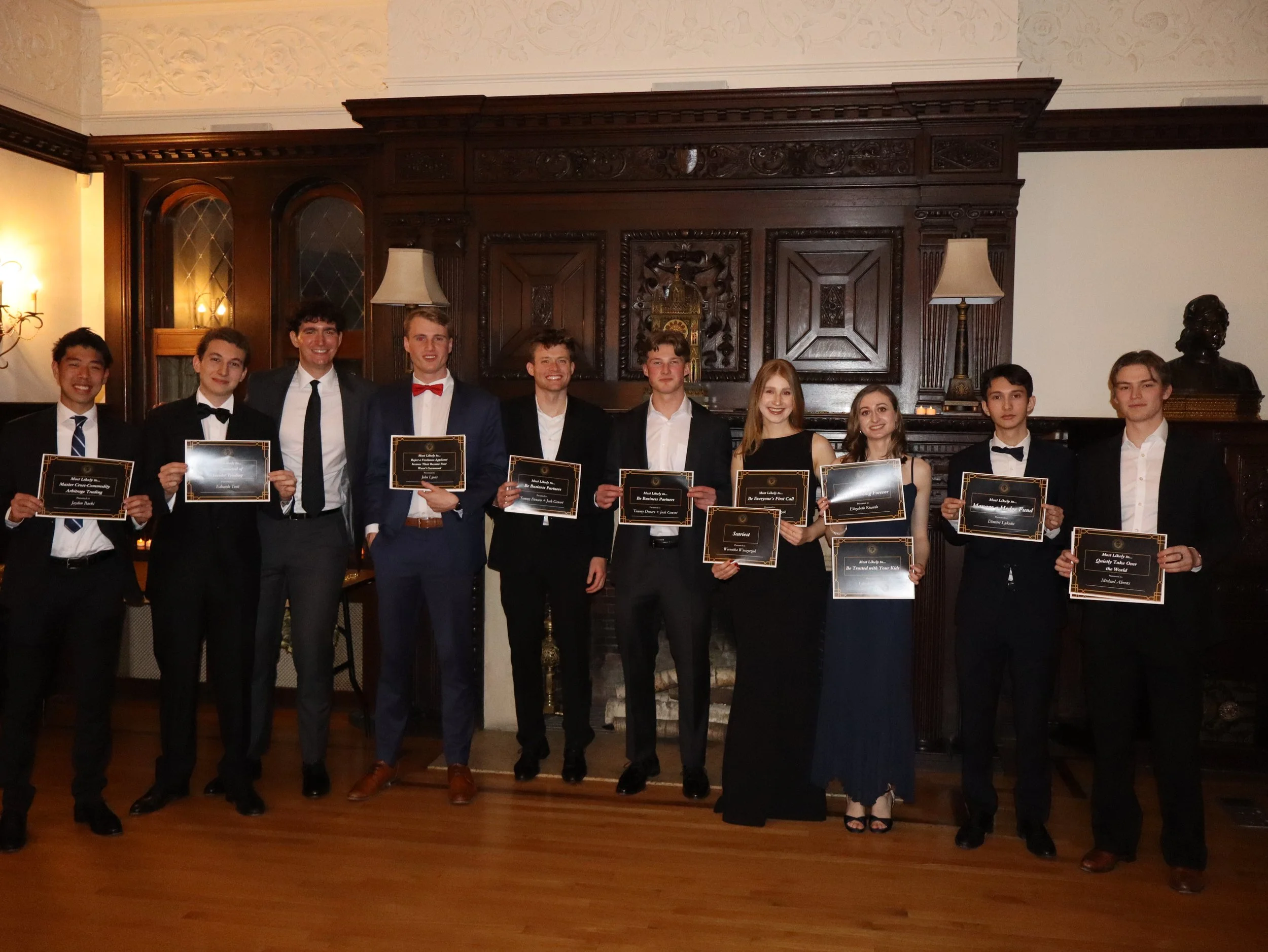
Last school year closed on a celebratory note with the first ever BUFC Gala, held at the iconic BU Castle. With live music, food, and the full club together for the evening, it was a chance to step back and honor the internship and full-time offers our members had secured and celebrate a transition in club leadership. It is a tradition we fully intend to carry forward.
Looking ahead, we are actively closing the gap between BUFC and the most respected undergraduate finance clubs in the country. This coming year, we will extend our Investment Management Program to include desk-transferable skills, advanced M&A and LBO modeling, and Excel training to ensure that every BUFC member who secures an offer transitions seamlessly into the workforce, excels on the desk, and earns a full-time return offer.
None of this would be possible without our faculty advisor, Professor Louis Salemy, whose mentorship and leadership are foundational to everything we do. Thank you, Professor.
Sincerely,
Weronika WieczerzakLetter from The president